Sunday, 13 March 2011
Hegel
I cant say I fully grasped the concepts of Hegel in his chapter in A History of Western Philosophy, but through the seminars and lectures I think I have come to grasp some the main concepts of which Hegel believed in (but not in too much detail though). So I will try to explain to my knowledge what Hegel believed in.

Karl Marx
- 'Capitalism comes into the world dripping from head to foot, from every pore, with blood and dirt'. This is a famous quote from Karl Marx.
- Marx was born to a Jewish family in 1818. He converted to Lutherism.
- He first studied Law then Philosophy, but finally decided to become a journalist. He was influenced by Hegel.
- He was pushed out of Germany and France and pretty much everywhere else in Europe because of his radical views. He finally settled in London in 1848, where he lived for the rest of his life. he was buried in Highgate cemetery.
- He believed that everything had somehing to do with the economy. E.g. people live were they live because of the economy.
- Unlike other philosophers Marx wanted to get his hands dirty and make a change, instead of just talking about his ideas like other philosophers did.
- Marx based his views on real life and facts, which is (materialism). He used to go to the British Museum and look through artifacts for decades, just to gather facts.
- Marx's theory on Alienation rests first on his theory of human nature. Which is the human need for shelter,clothing, food and sex.
- Marx wrote in the time of the industrial revolution, so he thought that factory workers were Alienated because they would each have there job to do in an assembly line. Without even knownig what the final product would look like or be once it had left there station of the assembly line. So in that sense the workers would be alienated from the final product and from the other workers on the assembly line and in the factory.
- According to Karl Marx Communism is the final outcome, the communist state is the best possible situation.

Tuesday, 22 February 2011
Semester 2, Week 3 notes
- The creatures of Prometheus (1801) is a song composed by Ludwig Van Bethoven.
- Prometheus is the bringer of fire and took fire from the gods to give to mankind. He was punished by the god of Jupiter and tied to a rock whilst vultures came to eat out his Liver everyday for 30 years.
- Mary Shelley's Frankenstein is the modern Prometheus (1818).
- Prometheus is the adopted god of romanticism.
 |
| Prometheus |
- Percy Shelly's Ozymandias- Also known as Ramesses II, ruled Egypt for 67 years and was one of the great Pharaohs. She wrote a famous sonnet about him in January 11 1818.
- The Egyptian empire in the time of Ozymandias was the most powerful in the world, but at the time when Percy Shelly wrote her sonnet, the British empire was the most powerful. So I find it extremely pretentious of the British to bring the Statue of Ozymandias to the British Museum. Because its almost as if the British are saying that they are great because they have everything that's great from other countries in there own country. I'm pretty sure that Ramesses himself would of preferred his statue to stay in Egypt.
Tuesday, 8 February 2011
Semester 2, week 1 notes
- Rousseau loved mountains and enjoyed walking. He lived on a Island close to Vienna, this was because his ideas were often controversial, so therefore he was often run out of towns.
- Rousseau believed in nature and that civilisation had corrupted us. He believed we once were 'Natural', 'Free' people before there was civilisation.
- He believed that people who were not from a civilisation were pure and innocent human beings. He thought that humans should be more like animals, because he thought that animals were innocent, pure and beautiful creatures.
- He once came across the people of Tahiti and thought they were all happy, free people so he believed that people should be more like them.
- One of his most popular quotes is ' Man is born free but everywhere is in chains '.
- He believed that civilisation began when a man put down his stick/fence and said 'this is my land'. He believed that what should of happened was that someone should of picked up that stick and said 'dont be stupid, this is not your land, this is our land'.
- He thought that babies were beautiful because they had not yet been tampered with by civilisation. He also thought that we could not go back into our purest form, which was in nature.
- He believed in a ' General Will ' were he thought that as long as everybody agreed on something, there would be no loss in freedom for anyone.
- The dangers of the ' General Will ' is that if someone doesn't agree with it, then they will not be truly free in Rousseau's eyes.
- The legacy of Rousseau was the Declaration of the rights of man and of the citizen, which was used at the end of the French Revolution.
- Wordsworth said that the revolution seemed to bring Rousseau's idea of natural man to reality. This was the romantic movement in action.
- Starting from 1972 the reign of terror began. In 1972 Paris was attacked by Prussia, which meant that the citizens of Paris were armed.
- In 1973 the Guillotine was invented and it was thought that everybody should be executed the same way. So that year the King was executed by the Guillotine just like any normal citizen would be, whereas before the King would have been executed by Sword and normal citizens would have been executed in which ever way thought possible.
- Mary Wollstonecraft believed that education was the key, she believed that there is nothing different between a man and a women when they are born. She believed that as long as women were educated , they could be equal to men. She admired and believed in John Locke's theory about human beings being born like a blank slate. She also had a love hate relationship with Rousseau..........
 |
| Thought to be Rousseau |
Friday, 10 December 2010
Spinoza
- Spinoza (1632-77) is known to be the noblest and most lovable of all the great philosophers. He was born a Jew but his whole philosophy is dominated by the idea of god. His family went to Holland from Spain or maybe Portugal, to escape the Inquisition. He firstly in Amsterdam and then Hague, earning a living by polishing lenses. At the early age of 44 he died of Phthisis.
- His chief work was the Ethics, however he did write two other books, the Tractatus Theologico-Politicus, which is a combination of biblical criticism and political theory. The other was the Tractatus Politicus, which deals with political theory only.
- Spinoza's political theory is mainly derived from Hobbes. He states that in a state of nature, there is no right or wrong because wrong consists of disobeying the law. He holds that the sovereign can do no wrong and that the church should be entirely subordinate to State. He is opposed to all types of rebellion, even against a bad government.
- Spinoza's Ethics deals with three main matters. It begins with metaphysics; it the goes on to the psychology of the passions and the will; and finally it sets forth an ethic based on the preceding metaphysics and psychology.
- For Spinoza, he believed that for him, thought and extension were both attributes of god. He also believed that there can only be one being who is wholly positive and he must be absolutely infinite. Which leads him to believe that everything that happens is a manifestation of God's inscrutable nature and that it is logically impossible that events should be other that they are. This leads to sin where according to Spinoza, everything is decreed by God and therefore is good.
- Spinoza believed in a theory that the human mind has an adequate knowledge of the eternal and infinite essence of God. He also stated that 'The mind's highest good is the knowledge of God, and the mind's highest virtue is to know God'.
- Like Socrates and Plato, Spinoza believed that all wrong action sis due to intellectual error.
- According to Spinoza's (irrational and ignorant thinking) 'whatever happens is part of the eternal timeless world as God sees it; to him the date is irrelevant'. Also ' only ignorance makes us think that we can alter the future; what will be will be, and the future is as unalterably fixed as the past. that is why hope and fear are condemned: both depend upon viewing the future as uncertain, and therefore spring from lack of wisdom'.
- Spinoza also believed that there is no evil, because God has no knowledge of evil, because there is no evil to be known.
- Spinoza's outlook is intended to liberate men from the tyranny of fear. His wisdom was that free men didn't think of death, but only of life. He lived up to these words because on the day he died, he was said to be completely calm and spoke of every day matters that interested him as if it was a normal day.
 |
| Spinoza |
- Spinoza spoke about emotions a lot and emotions in relation to God. Below are some directs quotes from 'Russell's History of Western philosophy' on Spinoza and emotions.
- Understanding that all things are necessary helps the mind to acquire power over the emotions. 'He who clearly and distinctly understands himself and his emotions, loves God, and so much the more as he more understands himself and his emotions'.
- All joy in true thought is part of the intellectual love of god, for it contains nothing negative, and is therefore truly part of the whole, not only apparently, as are fragmentary things so separated in thought as to appear bad'.
- 'Everything is part of God. This understanding of everything as part of God is love of God. When all objects are referred to God, the idea of God will fully occupy the mind'. Thus the statement that 'Love of God must hold the chief place in the mind'.
- Lastly Spinoza says that a man who loves God cannot want God to love him because God loves and hates no one. This leads to the quote 'a man who loved God and wished God to love him would be wishing to feel pain, which is absurd'.
- My opinion is that Spinoza is very ignorant to think these things and to hold these believes. With me being an Atheist, I cant stand people like Spinoza who solely believe that God is the answer to every question that could be possibly asked. When I was reading chapter 10 of 'Russell A Western Philosophy' I couldn't believe how many times I saw the word God in one chapter, I mean its just ridiculous. The only two ideas that I could possibly agree on is when he says that free men don't think of death but only of life. Also that he believes 'revenge is a dangerous motive' and that 'life dominated by a single passion is a narrow life'. Even though he got the latter idea from the bible quote 'Love your enemies'.
Saturday, 4 December 2010
Descartes
- Rene Descartes (1596-1650) is widely known to be the founder of modern philosophy.
- Descartes's father was a councillor of the parliament of Brittany and possessed a moderate amount of landed property. When Descartes father died, he inherited his land and sold his estates and invested his money, obtaining six or seven thousand Francs a year.
- From 1604 to 1612, he was educated at the Jesuit college of La Fleche and enlisted in the Dutch army in (1617). Then in 1619 he enlisted in the Bavarian army. He was also a sincere Catholic.
- In 1621 he gave up fighting in the army after a visit to Italy. He then settled in Paris in 1625, but in 1628 he rejoined the army. When this episode was finished, he decided to live in Holland. This was probably to escape persecution.
- He lived in Holland for 20 years, from 1629 to 1649, except from a few brief visits to France and one to England, both were for business. One of the main reasons why Descartes moved to Holland, was because it was the one country that had freedom of speculation in the 17th century. This is also why many philosophers who wrote controversial books, went to Holland to get them printed. Such as Lock and Spinoza. But even in Holland, Descartes was subject to vexatious attacks by the Protestants. Because it was said that his views led to atheism, he would have been prosecuted if it wasn't for the intervention from the ambassador of France and the Prince of Orange. With this attack having failed, another less direct attack was made on him a few years later, by the the authorities of the University of Leyden, which forbade any mention of him. But yet again the Prince of Orange intervened and told the University to stop being silly.
- Queen Christina of Sweden, thought that because she was a sovereign, she had the right to waste the time of great men. So because she was a big fan of Descartes, she wanted daily sessions from him. But because she was so busy, the only time of day that she could spare was five in the morning. With Descartes being a man who didn't like to wake up before midday, he was unaccustomed to this early rising in the cold of a Scandinavian winter and therefore couldn't uphold these daily sessions.
- Descartes fell ill and died in February, 1650. He never married, but he had a daughter who died at the age of five. Its been known, that Descartes said that the passing of his daughter was the greatest sorrow of his life. Descartes was always well dressed and always wore a sword.
- Descartes was a philosopher, a mathematician and a man of Science. His great contribution to geometry was the invention of co-ordinate geometry, although not quite in its final form.
- The book in which he set forth most of his scientific theories was Principia Philosophiae, which was published in 1644. The two most important books that Descartes has written from a philosophical stand point are the Discourse on method (1637) and the Meditations (1642).
- In these books, Descartes begins by explaining the method of 'Cartesian doubt'. The method of 'Cartesian doubt' is basically to help Descartes have a firm basis for his philosophy. In order for him to achieve this he resolves to make himself doubt everything that he can manage to doubt. Knowing that this process could take some time, he decided to remove everything from his mind that he could possibly doubt in relation to his practice. He began with scepticism in regard to the senses. 'I can doubt', he says 'that I am sitting here by the fire in a dressing-gown ? yes, for sometimes I have dreamt that I was here when in fact I was naked in bed'. He then proceeds to discuss how he thinks that there might be a powerful demon misleading him and that if there is such a demon, it might be that all things that he sees are only are illusion of which the demon makes use as traps for Descartes credulity. In order for Descartes to overcome these thoughts, he then went on to say one of the most famous philosophical quotes of his time, which was 'There remains, however, something that I cannot doubt: no demon, however cunning, could deceive me if I did not exist. I may have no body : this might be an illusion. But thought is different, While I wanted to think everything false, it must necessarily be that I who thought was something; and remarking that this truth, I think, therefore I am'. Once Descartes established this quote, he had set a firm foundation from which he could rebuild his knowledge from. He had established that the only thing he knew was real, was his mind. ' The I that has been proved to exist has been inferred from the fact that I think, therefore I exist while I think, and only then. If I ceased to think, there would be no evidence of my existence. I am a thing that thinks, a substance of which the whole nature or essence consists in thinking, and which needs no place or material thing for its existence. The soul, therefore, is wholly distinct from the body and easier to know than the body; it would be what it is even if there were no body.'
- He also believed that Knowledge of external things must be by the mind, not by the senses.
- Descartes believed that because god is good, god wouldn't act deceitful like the demon which he has previously mentioned. Therefore he believed that because god gave him an inclination to believe in bodies, bodies must therefore exist. He also believed that god gave him the faculty to correct errors, therefore, he uses this faculty to employ that whatever is clear and distinct, must be true. Which enables him to know mathematics and physics.
- In the Meditations there was a discussion as to why the mind feels 'sorrow' when the body is thirsty. The Cartesian answer to this, was, the body and mind were like two clocks, that when one indicated 'thirst' the other indicated 'sorrow'.
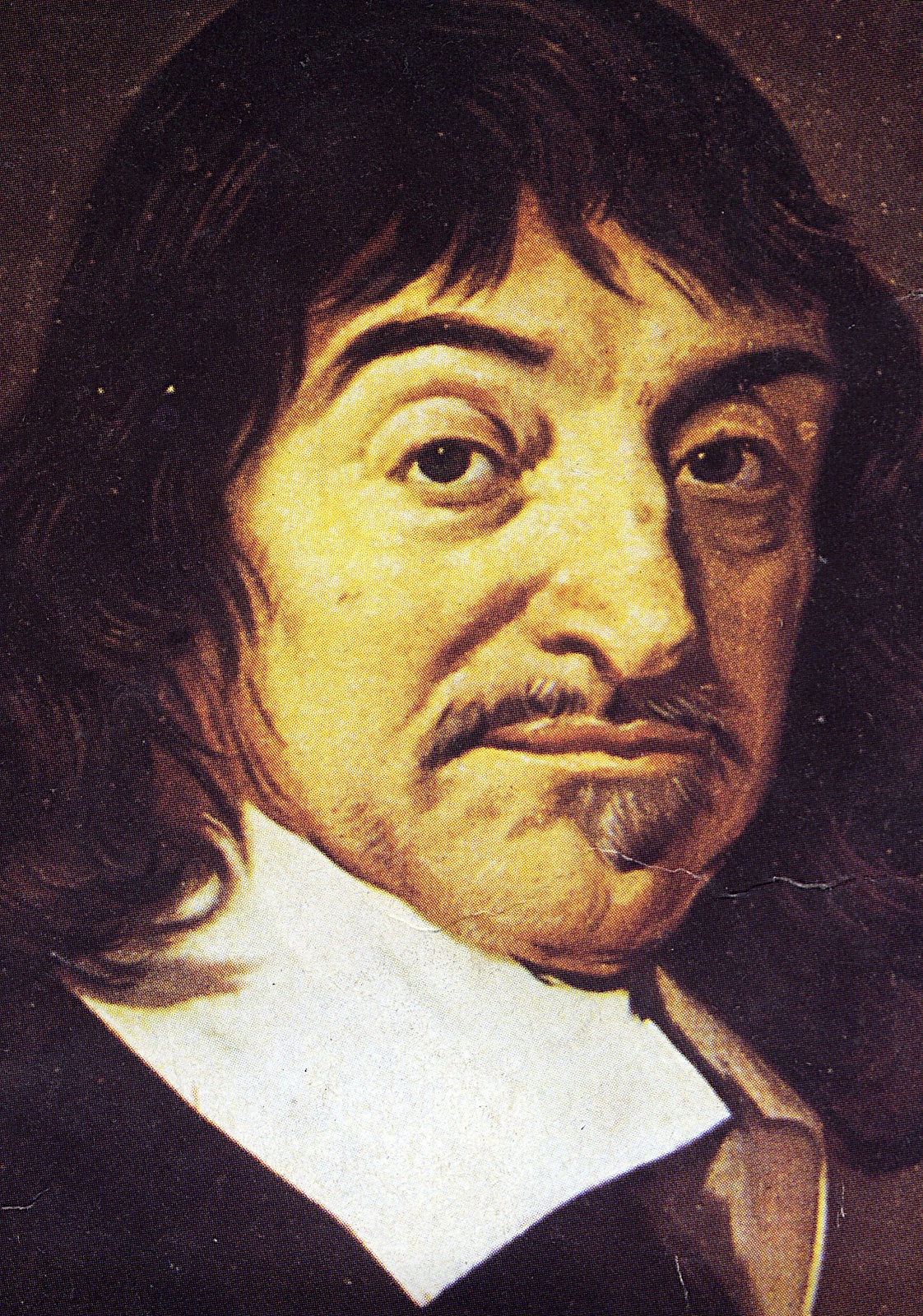 |
| Rene Descartes |
Wednesday, 1 December 2010
Seminar Paper on Swifts, A Modest Proposal
- I would just like to say that I wrote this seminar paper as i was reading it.
- Firstly Swift talks about beggars crowding the cabin doors followed by 3,4,5 or 6 children behind, all in rags and begging every passenger. Beggars are known to be of the female sex.
- Instead of the mothers working they choose to beg, and there children grow up to turn thieves or leave their native country, to fight the pretender in Spain, or sell themselves to the Barbadoes.
- 'As instead of being a charge upon their parents, or the parish, or wanting food and raiment for the rest of their lives, they shall, on the contrary, contribute to the feeding, and partly to the clothing of many thousands.' From this quote I think Jonathan Swift is trying to say that after the 1st year of the beggars child's life, instead of them becoming a burden on their mother and the public, that he should make good use of them. (But it is not clear to me how he tends on doing that yet).
- Swift believes that the advantages to his scheme will prevent women from aborting and murdering there children.
- He believes there remain 120,000children who are annually born of poor parents. He asks 'how will this number be provided for?'
- He he basically then goes on to say that the reason why its hard to provide for these kids is because they have no skill so therefore you cant employ them. He uses the example of not being able to employ them in handicraft or agriculture. He says the only skill they have, are as thieves.
- Swift then says ' that a young child well nursed, is, at a year old, a most delicious nourishing and wholesome food, whether stewed, roasted, baked, or boiled;' At this point it becomes clear that his proposal is to cook and perform acts of mass cannibalism on these children.
- He then says ' that of the 120,000 children, already computed, 20,000 may be reserved for breed', he also says 'that these children are seldom the fruits of marriage'. And 'one male will be sufficient to serve four females'.
- He then proposes that ,the remaining 100,000 may, at a year old, be offered in sale to the persons of quality and fortune, through the Kingdom, always advising the mother to let them suck plentiful in the last month, so as to render them plump, and fat for a good table.
- At this point I'm finding the reading extremely funny, simply because of how ludicrous his proposal is and just the thought he comes across as being dead serious. Especially when he starts talking about how a child would make two dishes at an entertainment for friends and also when he talks about seasoning them with a little salt and pepper, then eating them on the fourth day, especially in winter. Although I do believe that Swift is a satirist writer.
- He then talks about when a child is born, they should weigh 12puonds, but after a year should weigh 28 pounds.
- He also talks about there being more children born in roman catholic countries.
- Swift also thought about how much it would cost to nurse a beggars child, which he thinks it will be two shillings per annum T me this shows that he has really thought through all areas of his proposal.
 |
| Not the original cover, but probably the best. |
- He then goes on to say that a good fat child cost 10 shillings and that the mother could make a good profit of 8 shillings. By Swift saying this, he is trying to let the mothers know that there is money to be made. It almost sounds as if Swift is trying to make his proposal turn into a business. ( It sounds like a business proposal to me ).
- He then says 'those who are more thrifty ( as i must confess the times require ) may flea the carcass; the skin of which, artificially dressed, will make admirable gloves for ladies, and Summer boots for fine gentlemen'. At this point it sounds more like a business proposal, because it seems like Swift is trying to draw in more people to his proposal by coming up with more than one suggestion for why the publick should kill these children.
- Swift suggests buying the children alive, and 'dressing them hot from the knife, as we do roasting pigs'. Its almost as if he doesn't see these children as human, but more like animal.
- Swift claims that his American friend who gave him this idea, was given it after conversing with a famous salmanaazor, who is a native of the island Formosa. This friend told him that they eat children, who happened to be put to death. To me it seems as if Swift uses this story as an excuse to make it come across to the publick that his proposal is perfectly normal and that people actually perform these acts of cannibalism in other countries.
- When Swift refers to the 'Kingdom', he's talking about Ireland.
- Swift proceeds to state all the reasons why his Proposal would be beneficial to the publick. He says 'Wheareas the maintenance of 100,000 children, from two years old, and upwards, cannot be computed at less than 10 shillings a piece per annum, the nations stock will be thereby increased £50,000 per annum'. By him saying this, its as if he's trying to make it seem like it will be beneficial for Ireland's economy.
- Towards the end, Swift states ' I can think of no one objection, that will possibly be raised against this proposal, unless it should be argued, that the number of people will be thereby much lessoned in the kingdom'. From this, its as if he's very confident in his proposal.
- Lastly, in the last paragraph, he states ' I progress, in the sincerity of my heart, that I have not the least personal interest in endeavouring to promote this necessary work, having no other motive than the publick good of my country, and giving some pleasure to the rich. I have no children, by which I can propose to get a single penny; the youngest being nine years old, and my wife past child-bearing'.
- From this quote, to me, Swift is trying to make it sound as if he's not proposing it for personal reasons, but just in order to better his country. He also starts to sound very patriotic, because he keeps on referring to Ireland as 'the Kingdom' and he also says 'my country' and 'our country' very often.
- My brief overview of the Modest Proposal, is that I found the essay very entertaining and funny. I'm not sure how the Irish public took it back in 1729, but I would imagine that the uneducated members of the public, may have not seen this essay as satire and could of took it seriously. The reason I think this is because people in those days believed in much more far fetched things than mass cannibalism, so I believe that this essay could of been a disaster. From this video that I found on YouTube, it's probably right to say that you could see how Swift's Proposal can be made modern, but yet still entertaining and hilarious.
- Points Of Discussion.....
- In general what do you think of Swifts Proposal ?
- Do you think his being serious ? If no, why not ?
- What do you think people in 18th century Ireland thought about his Proposal ?
- What do you think his real motives where behind his Proposal ? Do you think they where what he said they where, as stated in the last paragraph ?
Subscribe to:
Posts (Atom)